
Updated April 1, 2026
A new COVID-19 strain called BA.3.2 — nicknamed “Cicada” — has quietly spread to 25 U.S. states and 23 countries. Health officials aren’t hitting the panic button, but they do want you paying attention. Here’s a plain-English breakdown of everything you need to know.

So why is it called “Cicada”?
Just like the insect that disappears underground for years before suddenly emerging in massive numbers, this variant first appeared in South Africa in late 2024, went quiet, then resurfaced in the U.S. and Europe with renewed force — hence the nickname.
Its technical name is BA.3.2, and it belongs to the Omicron family of COVID viruses. That shared ancestry is actually somewhat reassuring — but the sheer number of new mutations in its spike protein is what’s giving scientists pause. Those mutations could help the virus slip past immunity built up from past infections or vaccines.
Get Hospital List Near you under Ayushman Card Hospital List Section
What symptoms should you watch for?
Here’s the frustrating reality: Cicada’s symptoms look almost identical to the flu, RSV, and even the common cold. There’s no telltale sign. “Unfortunately, there is not really a distinct trait between these respiratory illnesses,” says Dr. Geeta Sood from Johns Hopkins Bayview Medical Center.
The one older hallmark — losing your sense of taste or smell — is now far less common with newer variants, including this one.
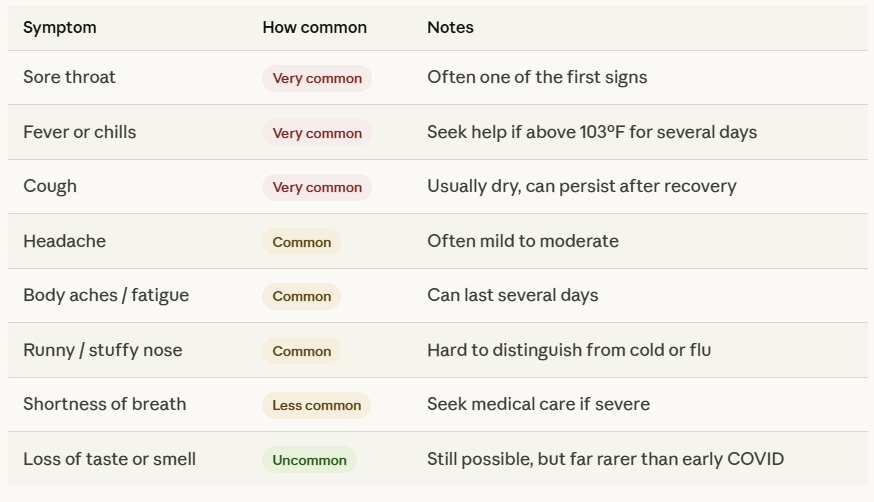
If you feel off — Get it tested. Don’t guess.
Should Your Child Get the HPV Vaccine? A Parent’s Complete Guide
Human papillomavirus (HPV) is the most common sexually transmitted infection worldwide. About 13 million Americans get HPV every year, including teenagers. The good news: the HPV vaccine is one of the most rigorously tested vaccines in history, and 2026 brings meaningful updates that make protecting your child simpler than ever. Read More …
How serious is it, really?

Right now, Cicada does not appear to cause more severe illness than previous variants. Experts at the CDC, Johns Hopkins, and Northeastern University are all saying the same thing: monitor it, but don’t panic.
What makes it worth watching is its immune-evasion potential. About 30% of COVID cases in Germany, Denmark, and the Netherlands have been linked to Cicada in recent months — and those are countries with well-vaccinated populations. Whether the same pattern plays out in the U.S. remains to be seen.
Vaccines, treatments, and tests — do they still work?
Tests detect stable parts of the virus that don’t mutate quickly. Check expiry dates — expired kits are unreliable.
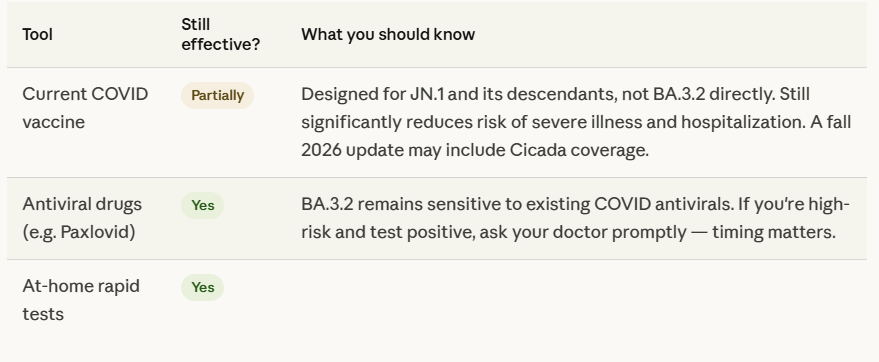
What should you actually do right now?
Practical steps — no drama, just common sense
- Get tested if you have any cold-like symptoms. Don’t assume. Testing is the only reliable way to know what you have and get treated correctly.
- Check your vaccination status. The current formulation is valid through fall 2026. If you haven’t had a shot recently, now is a good time — especially if you’re older or have health conditions.
- Stay home if you’re sick. This one never gets old. Spreading a respiratory illness to others — especially the vulnerable — is avoidable.
- Wash your hands often and mask up in crowded or high-risk indoor settings, particularly if you’re around elderly family or immunocompromised individuals.
- Watch local wastewater data. Your region’s surveillance reports can tell you which viruses are actually circulating near you — sometimes before cases spike.
- Seek care if symptoms worsen after a few days, if fever climbs above 103°F, or if you have trouble breathing. Don’t wait it out if something feels wrong.
The honest bottom line
COVID hasn’t gone away — it’s just become quieter, more seasonal, and more routine. Cicada is the latest reminder that the virus keeps evolving, and our defenses need to keep pace. But this isn’t March 2020. We have tests, treatments, and vaccines that work. The people ending up in hospital are overwhelmingly those who skipped their shots. Get Hospital List Near you under Ayushman Card Hospital List Section
Stay informed. Get tested when it matters. Protect the people around you who are most vulnerable. That’s still the whole playbook.
Cicada COVID Variant – Frequently Asked Questions (FAQs)
1. What is the Cicada COVID variant?
The Cicada COVID variant (BA.3.2) is a recently identified strain of the coronavirus that contains multiple mutations, making it more transmissible compared to some earlier variants.
2. Is the Cicada COVID variant more dangerous?
Current evidence suggests that the Cicada COVID variant spreads faster, but it does not appear to cause more severe illness than previous variants in most people.
3. What are the common symptoms of the Cicada COVID variant?
Typical symptoms of the Cicada COVID variant include:
- Fever
- Cough
- Fatigue
- Sore throat
- Nasal congestion
- Mild body aches
Symptoms are generally similar to earlier COVID-19 strains.
4. Do vaccines work against the Cicada COVID variant?
Yes. Existing COVID-19 vaccines remain effective against the Cicada COVID variant, especially in reducing the risk of severe illness, hospitalization, and death.
5. How can I protect myself from the Cicada COVID variant?
To stay safe from the Cicada COVID variant, you should:
- Stay up to date with vaccinations
- Wear masks in crowded or high-risk areas
- Wash hands regularly
- Maintain good ventilation indoors
6. Is it safe to travel during the Cicada COVID variant spread?
Travel is generally safe if you follow precautions. When dealing with the Cicada COVID variant, it’s important to:
- Check local transmission rates
- Follow regional guidelines
- Practice hygiene and masking when needed
7. Why is it called the Cicada COVID variant?
The term “Cicada COVID variant” is an informal name used online to describe the BA.3.2 strain, often referencing its rapid and widespread emergence.
8. How fast does the Cicada COVID variant spread?
The Cicada COVID variant spreads quickly due to its mutations, making it more contagious than some earlier strains, particularly in crowded settings.
9. Who is most at risk from the Cicada COVID variant?
High-risk groups for the Cicada COVID variant include:
- Older adults
- People with underlying health conditions
- Individuals with weakened immune systems
10. Can the Cicada COVID variant reinfect people?
Yes, like other variants, the Cicada COVID variant can cause reinfection, even in people who previously had COVID-19 or were vaccinated, though symptoms are often milder