
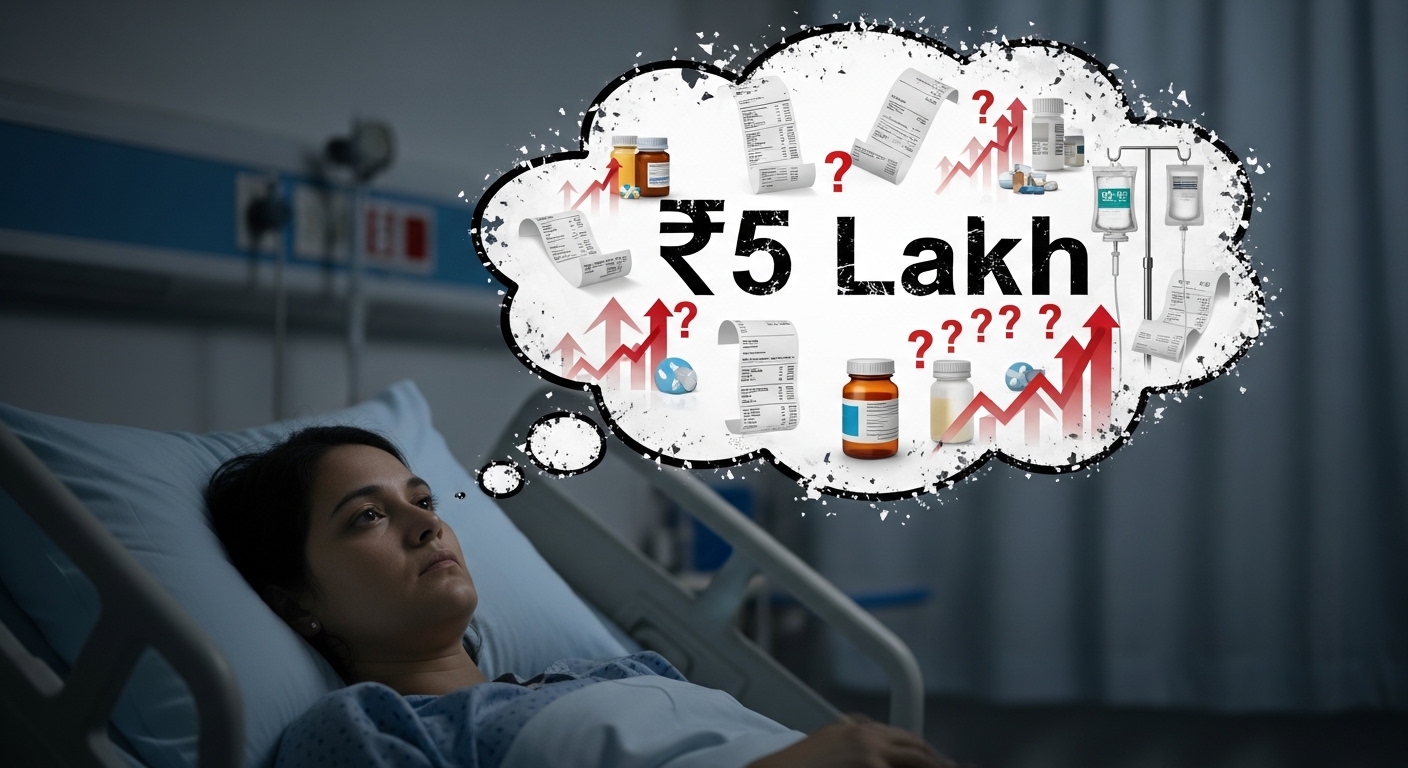
You’ve probably heard about the Ayushman Bharat scheme and its promise of ₹5 lakh health coverage. It sounds incredible on paper, right? But if you’ve ever tried to use your Ayushman card at a hospital, you know the reality can be quite different.
Let me walk you through what this scheme actually means for patients like you and me—without the government jargon or the political noise. Just the real, practical truth.
What Does ₹5 Lakh Really Mean When You’re Actually Sick?
Here’s the thing most people don’t realize: that ₹5 lakh isn’t sitting in a bank account with your name on it. What the ₹5 lakh coverage really means in medical terms is that it’s the maximum amount the government will pay hospitals for your treatment in a year.
The coverage includes specific packages for different treatments. A knee replacement might have a package rate of ₹80,000, while bypass surgery might be ₹1.2 lakh. The hospital gets paid these fixed amounts, regardless of what they might normally charge.
But here’s what surprises most patients: consultation fees before admission, most diagnostic tests done outside the hospital, and medications after discharge often aren’t covered. Many people walk in thinking everything is free, only to discover they still need to pay for quite a bit.
Which Treatments Are Actually Covered?
The good news? Ayushman Bharat covers a surprisingly wide range of medical treatments, including many that would normally bankrupt a middle-class family.
Major surgeries like open-heart procedures, cancer treatments including chemotherapy and radiation, kidney transplants, brain surgeries, and complicated orthopedic procedures are all included. Emergency care, ICU treatments, and critical procedures are covered too.
Joint replacements, cataract surgeries, pregnancy-related complications, and newborn care are also part of the package.
But not everything patients assume is covered actually is. Cosmetic procedures, routine dental work, fertility treatments, and regular health check-ups are mostly out of pocket.
Why Do Some Hospitals Say “No” to Ayushman Card Patients?
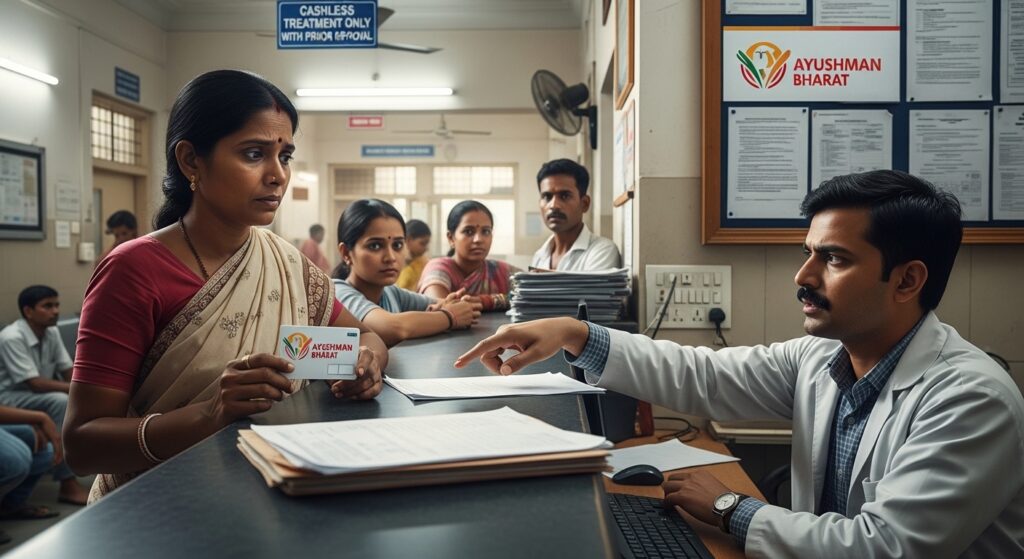
The reasons hospitals refuse Ayushman card patients are more complicated than just “they don’t want to help poor people.”
First, the package rates the government sets are often lower than what hospitals normally charge. A hospital might spend ₹1.5 lakh on a surgery but only get reimbursed ₹1 lakh.
Then there’s the payment delay problem. Hospitals complain they don’t get paid for months—sometimes six months or longer. Imagine running a business where your clients don’t pay for half a year.
Government hospitals generally accept Ayushman cards more readily, but they’re often overcrowded with longer waiting periods. Private hospitals prefer paying patients because it’s more profitable and involves less paperwork.
The Costs You Still End Up Paying
Here’s something that catches almost everyone off guard: despite having an Ayushman card, patients often still pay out of pocket.
Pre-hospitalization expenses like doctor consultations, diagnostic tests to confirm your condition, and medications you need before surgery usually aren’t covered.
During hospitalization, while the surgery and bed charges are typically covered, you might pay for certain medicines not on the scheme’s list, specific implants that exceed the package rate, or additional diagnostic tests.
After discharge is when it gets expensive: follow-up medicines, physiotherapy, regular check-ups, and ongoing treatments often come from your own pocket.
Cashless treatment sometimes fails for technical reasons too—software issues, approval delays, or documentation problems. When that happens, you pay upfront and try to get reimbursed later.
How the Payment System Affects Your Care
Understanding how hospitals get reimbursed under Ayushman Bharat helps explain many frustrations patients face.
Hospitals submit claims after treating you, then wait for government approval. This can take months, creating serious cash flow problems for smaller hospitals.
Delayed payments are one of the main reasons hospitals exit the scheme. Some hospitals say this affects the quality of care they can provide—they might use cheaper alternatives or limit additional services.
Fraud and Its Impact on Real Patients
Fraud in the Ayushman Bharat scheme is an uncomfortable reality. Some hospitals have submitted fake claims for treatments that never happened or inflated procedures.
When fraud is detected, hospitals get suspended or Removed. But genuine patients suffer most—they must travel farther for treatment, face more scrutiny on legitimate claims, and deal with increased suspicion from hospitals.
Your Rights as an Ayushman Cardholder
Ayushman cardholders have specific rights that hospitals must respect.
You have the right to free treatment at any empaneled hospital without paying anything upfront. You can choose any empaneled hospital and deserve dignified treatment without discrimination.
Hospitals cannot legally demand payment for covered procedures. If they do, call the helpline (14555) or report it through the official app.
Has This Scheme Actually Made a Difference?
The real impact of Ayushman Bharat on Indian healthcare is mixed. For many rural and low-income families, this scheme has been life-changing. People who would never have afforded major surgeries have received care.
But doctors and hospitals often struggle with financial pressures and delayed reimbursements. Whether PMJAY has reduced medical expenses depends on what you’re comparing—for hospitalized treatment of covered conditions, absolutely yes. For overall healthcare including outpatient care and chronic disease management, the impact is smaller.
Ayushman Bharat vs Private Insurance
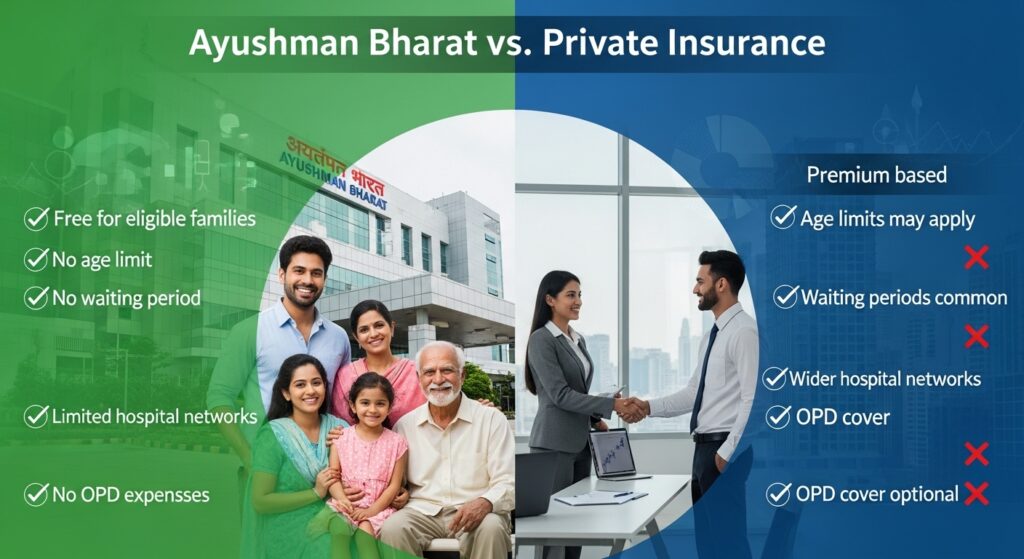
Comparing Ayushman Bharat and private health insurance shows they serve different purposes.
Ayushman Bharat is free for eligible families, has no age limit or waiting period, but has limited hospital networks and doesn’t cover OPD expenses.
Private insurance requires premiums, offers wider hospital networks and outpatient coverage, but has waiting periods and age restrictions.
Who benefits most from PMJAY? Families below the poverty line, those in informal employment, Aged(75+) people who can’t afford private insurance, and people with pre-existing conditions.
What’s Next for Ayushman Bharat?
The future of Ayushman Bharat looks toward digital integration with health IDs storing all medical records and better tracking systems.
There’s talk of expanding coverage to include outpatient care and preventive health services. What this means for patients going forward is fewer documentation hassles, faster claim processing, and better grievance redressal.
The Bottom Line
Ayushman Bharat isn’t perfect, but for millions of Indians who had zero access to hospital care, it’s been a lifeline.
Yes, there are gaps. Implementation varies wildly from state to state. But the core idea—that no Indian should die or go bankrupt because they can’t afford treatment—is worth fighting to improve.
If you’re an Ayushman cardholder, know your rights, understand what’s covered, and speak up when hospitals violate the scheme’s rules.
The ₹5 lakh headline might be misleading, but behind it is a real attempt to make healthcare more accessible.
Also Read : Medicaid vs Ayushman Bharat – Complete Comparison for Indians in USA
Frequently Asked Questions !
1. Is the ₹5 lakh coverage per person or per family?
The ₹5 lakh coverage is per family per year, not per person. This means if your family has 5 members, you all share this ₹5 lakh limit collectively. So if one family member uses ₹3 lakh for a surgery, the remaining ₹2 lakh is available for other family members for the rest of that year. The good news is there’s no cap on family size—whether you have 3 members or 10, the entire family is covered under the same ₹5 lakh limit.
2. Can I use my Ayushman card at any hospital in India?
No, you can only use your Ayushman card at empaneled hospitals—those that have registered with the scheme. Not all hospitals accept Ayushman cards. Government hospitals in most states accept it, but private hospital participation varies widely by state and city. Before going for treatment, always check if the hospital is empaneled by visiting kartikanand.shop or calling the Ayushman Bharat helpline at 14555. The good news is you can use your card at any empaneled hospital anywhere in India—you’re not restricted to your home state.
3. Do I need to pay anything at the hospital if I have an Ayushman card?
For covered procedures during hospitalization, you shouldn’t pay anything—it’s supposed to be completely cashless. However, in reality, you might still need to pay for: medicines not on the approved list, diagnostic tests done before admission, post-discharge medications and follow-up care, and certain consumables or implants that exceed package rates. Hospitals cannot legally ask you to pay for covered procedures, so if they demand money for something that should be free, you have the right to file a complaint. Always ask for an itemized bill to understand what’s covered and what isn’t.
4. What should I do if a hospital refuses to treat me despite having a valid Ayushman card?
First, ask the hospital for a written explanation of why they’re refusing treatment. If the hospital is empaneled and your procedure is covered, their refusal may be illegal. You can immediately call the Ayushman Bharat helpline at 14555 or contact your state’s Ayushman office. File a formal complaint through the Ayushman Bharat app or website with details like hospital name, date, and reason for refusal. You can also approach another empaneled hospital nearby. Document everything—names of staff you spoke with, timestamps, and any written communication—as this helps when filing complaints.
5. Does Ayushman Bharat cover pre-existing diseases like diabetes, heart problems, or cancer?
Yes! One of the biggest advantages of Ayushman Bharat is that it covers pre-existing diseases with no waiting period. Unlike private insurance that often has 2-4 year waiting periods for pre-existing conditions, you can use your Ayushman card immediately for treatments related to diabetes complications, heart surgeries, cancer treatment, kidney diseases, and other chronic conditions. However, remember that it covers hospitalization and procedures, not regular outpatient management. So your bypass surgery is covered, but your daily diabetes medications aren’t. Cancer chemotherapy during hospitalization is covered, but follow-up medicines you take at home may not be.
Have more questions about Ayushman Bharat? Visit kartikanand.shop for detailed information, hospital lists, and guidance on using your card effectively.